Supporting Schools Through Strengths-Based, Relationship-Centered Practice
About
Kids at Heart partners with schools to help educators feel more confident and supported in meeting children’s social-emotional needs. Using strengths-based, relationship-centered approaches, we combine clinical insight with years of classroom experience to offer tools that feel practical and realistic. Our work is rooted in a relationship-centered approach, recognizing that connection is the foundation for regulation, behavior, and learning. Using Play Therapy concepts, we help teachers understand behavior and respond in ways that support students, without adding more to their plate.
Who we are:
A local clinical practice that supports children’s
social-emotional development through playbased
and relationship-centered approaches.
We work directly with families and educators to
build confidence, strengthen relationships, and
provide practical tools that support both
regulation and learning.
Our Approach
We believe:
- Relationship is the most powerful tool for
change - Behavior is communication
- Teachers already have the qualities and
skills for success
Our goal is to empower educators and families.
Not overwhelm them.
What we offer:
Kids at Heart works to facilitate meaningful, practical impact with teachers. We take what we know works in the therapy room and translate it into practical strategies that educators can incorporate into existing routines.
Trainings and Workshops
- Managing Challenging Behaviors
- Facilitating Therapeutic Interactions: The Art of the Relationship
- Child Development Refresher- Socioemotional Focus
Caregiver Groups
Support groups to facilitate connection amongst caregivers and address burnout
School Consultation Services
- Classroom observation and feedback
- Support for specific classroom challenges
- Collaborative problem-solving with teaching and/or leadership teams
- Ongoing consultation to support implementation
Our School Service Consultation is strengths-based, reflective, and individualized. We offer choices of 3-month, 6-month, or 9-month contracts to support growth and learning over time. We work directly with administrators to create a service plan specific to your needs and goals. Consultation services may include:
Areas we address:
- Managing challenging behaviors
- Understanding behavior as communication
- Relationship-centered and trauma-informed classroom practices
- Supporting neurodiversity
- Working with families
- Effective structuring in child-centered practice
- Teamwork and Leadership
- Integrating socioemotional interventions into existing routines
Schools
- We build on what teachers are already doing
- This is not another program; it’s a shift in how we understand behavior
- Relationship is the most powerful tool for change
- Play is how children communicate, regulate, and learn
- We empower educators to feel confident, not overwhelmed
Areas we address
- Managing challenging behaviors
- Understanding behavior as communication
- Relationship-centered and trauma-informed classroom practices
- Supporting neurodiversity
- Working with families
- Effective structuring in child-centered practice
- Teamwork and Leadership
- Integrating socioemotional interventions into existing routines
Schools
- We build on what teachers are already doing
- This is not another program; it’s a shift in how we understand behavior
- Relationship is the most powerful tool for change
- Play is how children communicate, regulate, and learn
- We empower educators to feel confident, not overwhelmed
Areas we address:
- Managing challenging behaviors
- Understanding behavior as communication
- Relationship-centered and trauma-informed classroom practices
- Supporting neurodiversity
- Working with families
- Effective structuring in child-centered practice
- Teamwork and Leadership
- Integrating socioemotional interventions into existing routines
Schools
- We build on what teachers are already doing
- This is not another program; it’s a shift in how we understand behavior
- Relationship is the most powerful tool for change
- Play is how children communicate, regulate, and learn
- We empower educators to feel confident, not overwhelmed
Play Therapy at School
Why Play Therapy in Schools?
Play is the natural language of children. Through playbased
approaches, educators can:
- Support emotional regulation
- Reduce challenging behaviors
- Strengthen relationships
- Increase student engagement
Research shows play therapy leads to meaningful improvements in children’s adjustment and emotional functioning.
Why Kids at Heart?
Practicing clinicians working with children today
Trusted expertise in anxiety, trauma, ADHD, and development
Small, local, and collaborative
Flexible, responsive, and relationship-focused
We help you build on what already works.
What Schools can expect:
Increased teacher confidence
Improved classroom climate
More effective responses to behavior
Stronger student-teacher relationships

FAQ (For Schools & Administrators)
Q: What Sets Kids at Heart apart?
A: Our work is interactive, practical, and grounded in real classroom application, not just theory.
Q: Is this therapy for students?
A: No. This is professional development and consultation for staff, not direct clinical services.
Q: How does this fit into existing school frameworks?
A: We align with current practices and enhance what is already in place. No need to adopt a new program.
Q: What outcomes can we expect?
A:
- Improved classroom management
- Increased teacher confidence
- Better student regulation and engagement
Q: Why Play Therapy?
A: Play is how children naturally process emotions, build relationships, and develop regulation skills.
Key Benefits of Play Therapy in Education Settings
Play therapy offers a developmentally appropriate, research-informed approach that aligns closely with educational goals around behavior, engagement, and whole-child development.
- Strengthens Emotional Regulation (Foundation for Learning)
Children must be emotionally regulated to access higher-order thinking and learning. Play-based approaches:
- Support co-regulation and self-regulation skills
- Help children process stress, anxiety, and transitions
- Increase time spent in a learning-ready state
This directly impacts attention, participation, and academic engagement.
- Improves Classroom Behavior Through Understanding (Not Compliance)
Rather than focusing only on behavior management, play therapy:
- Helps educators understand behavior as communication
- Addresses underlying emotional needs
- Reduces reactive cycles (e.g., escalation, power struggles)
This leads to:
- Fewer disruptions
- More proactive responses
- More sustainable behavior change
- Builds Strong Teacher–Student Relationships
Research consistently shows that relationship is the primary driver of change in child development and mental health.
Play-based strategies help educators:
- Build trust and connection
- Respond with empathy while maintaining boundaries
- Create emotionally safe classroom environments
Stronger relationships lead to:
- Increased student engagement
- Greater cooperation
Improved classroom climate
- Increases Teacher Confidence and Efficacy
One of the most immediate impacts is on educators themselves.
Play therapy-informed training:
- Gives teachers practical, usable tools
- Reduces burnout by shifting perspective on behavior
- Reinforces what teachers are already doing well
Instead of adding “one more thing,” it:
- Integrates into existing classroom practices
- Builds confidence in responding to complex needs
- Developmentally Appropriate and Inclusive
Play therapy meets children where they are:
- Especially effective for early childhood and elementary settings
- Accessible across developmental levels and learning styles
Effective regardless of presenting issue, age, or background
- Evidence-Based with Strong Outcomes
Play therapy has been widely studied and shows:
- Moderate to large positive effects on child outcomes (Effect Size ≈ .66–.80) (LeBlanc & Ritchie, 2001; Bratton et al., 2005)
- Stronger outcomes when relationships and caregivers are involved
In school-based models, children demonstrate:
- Improved adjustment
- Better emotional functioning
- Long-term positive outcomes
- Aligns with MTSS, SEL, and Trauma-Informed Frameworks
Play-based, relationship-centered approaches:
- Fit naturally within Tier 1 and Tier 2 supports
- Strengthen SEL initiatives
- Align with trauma-informed practices
This makes integration seamless. Not disruptive.
- Supports Long-Term Development, Not Just Immediate Behavior
Play therapy focuses on:
- Emotional processing
- Relationship patterns
- Internal skill-building
This leads to:
- Lasting change (not just short-term compliance)
- Improved resilience
- Stronger social-emotional development over time
Let’s Connect
We’d love to learn about your school’s needs and explore how we can support your team.

Contact Us
(781) 400-3232 zoejacobplaytherapy@gmail.com
Address
42 Washington St. Wellesley Hills MA 02481
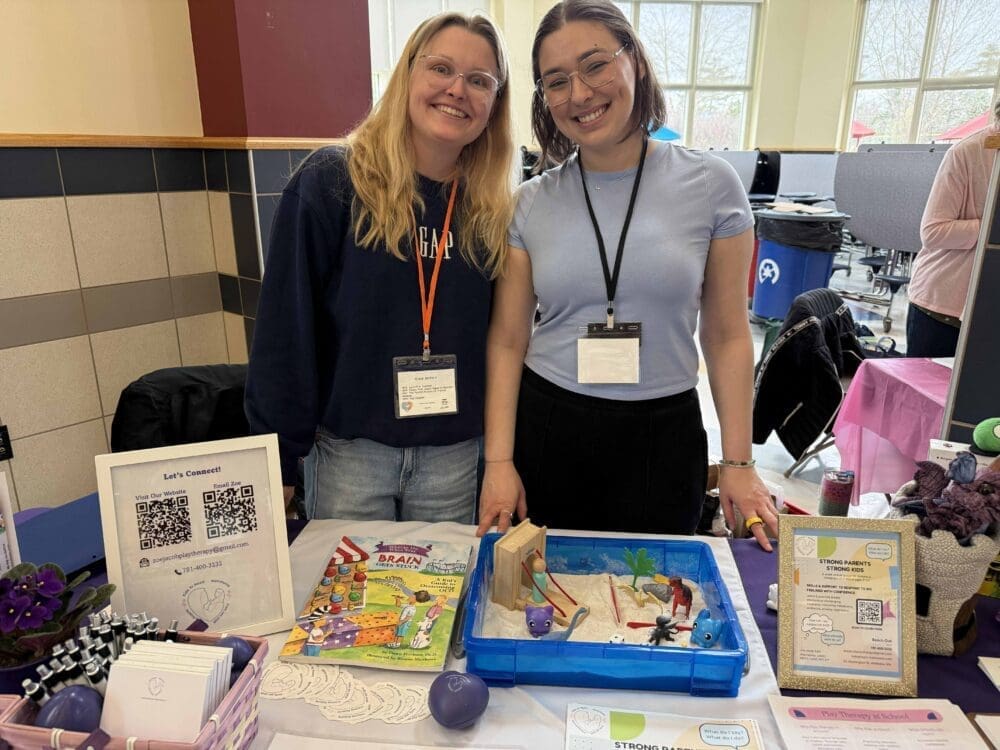
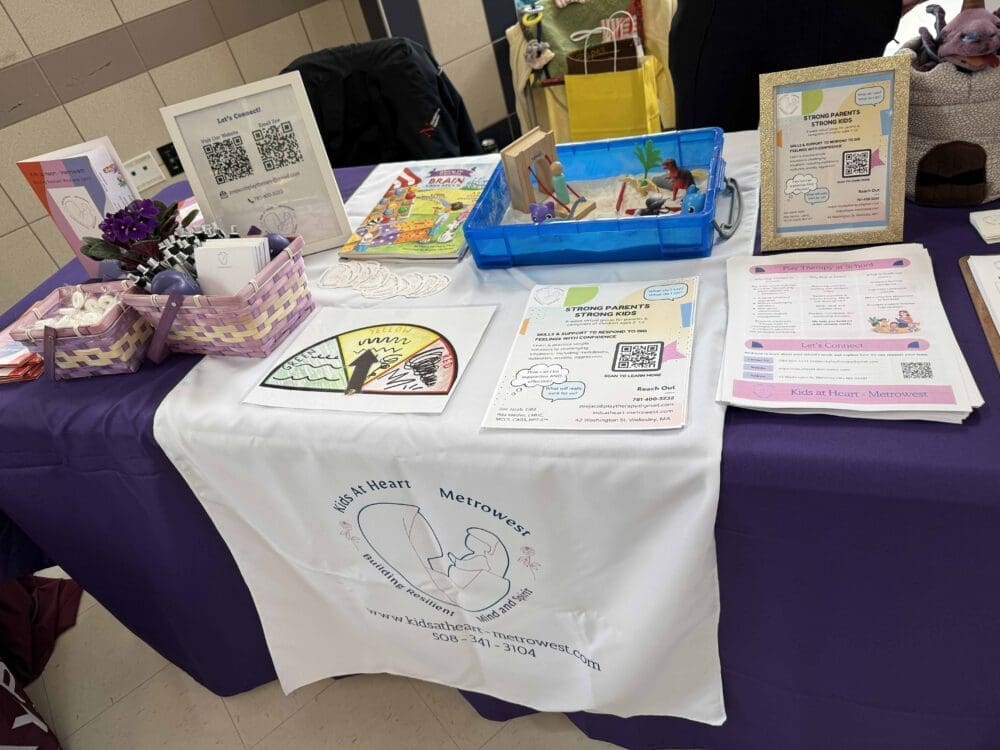
We were at the Massachusetts Association for Early Years Educators Conference (MAAEYC)!